
The Search for Truth
The Mysteries, Conspiracies & Legends collection is curated for the modern skeptic. We explore the thin line between documented history and cultural myth, providing a disciplined analysis of our most enduring enigmas. This volume is designed for readers who value documentation over rumor and proportion over revelation.
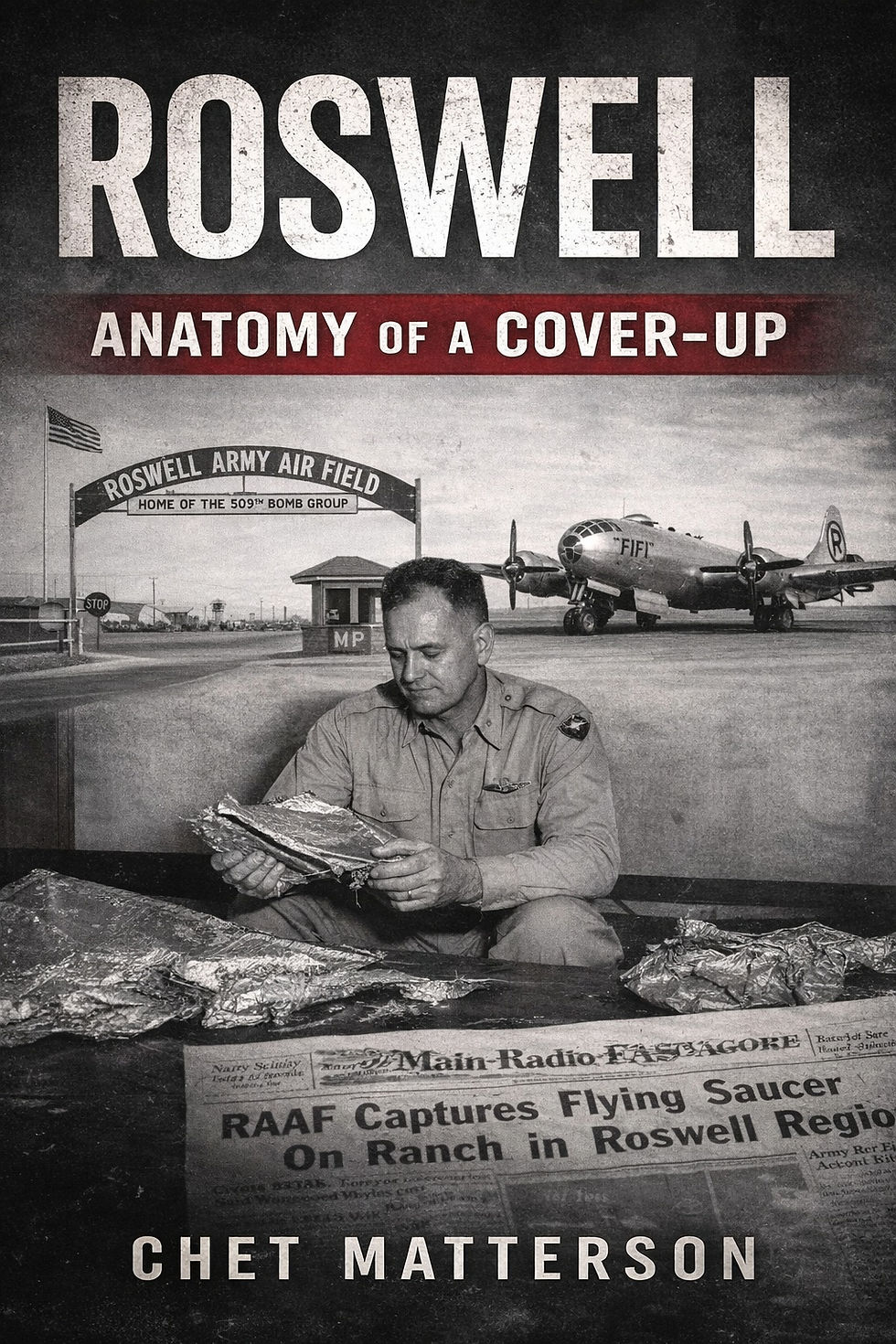
Roswell: Anatomy of a Cover-up
The Roswell Incident: Fact, Fiction, and Government Silence is a comprehensive historical analysis of how a minor Cold War episode became one of the most enduring legends of the modern age. Examining documented records, institutional behavior, and cultural forces, this book demonstrates how silence and media transformed uncertainty into conviction.

Area 51 Truth vs Fiction: Separating Cold War History from Alien Myth
What is really hidden at Area 51?
For decades, America’s most secretive military base has fueled speculation about alien spacecraft, recovered bodies, underground cities, and secret treaties with extraterrestrials.
But what does the historical record actually show?
In Area 51: Truth vs. Fiction, this volume in the History’s Famous Stories series separates documented Cold War aviation history from the myths that grew around it.
Drawing on declassified CIA records, Project Blue Book archives, Pentagon UAP reports, and aerospace history, this book examines:
-
Why Groom Lake was chosen in 1955
-
The U-2, A-12, SR-71, and stealth aircraft programs
-
How classified flight testing fueled UFO sightings
-
Bob Lazar’s claims and their evidentiary gaps
-
The 2013 CIA acknowledgment of Area 51
-
Modern UAP investigations and what they actually conclude
-
The psychology behind enduring conspiracy beliefs
Each chapter clearly distinguishes between:
✔ Confirmed historical record
? Unresolved questions
✖ Unsupported claims
This is not a book of ridicule or sensationalism. It is a disciplined examination of one of the most debated locations in modern history.
The real story of Area 51 is already extraordinary.
The question is whether it requires aliens.

Amelia Earhart: Who Really Flew The Plane: The True Story of Her Final Flight
On the morning of July 2, 1937, Amelia Earhart and her navigator Fred Noonan lifted off from Lae, New Guinea, in a heavily loaded Lockheed Electra bound for a tiny dot in the Pacific: Howland Island. They never arrived.
In the decades since, people have offered every kind of answer—secret missions, enemy capture, hidden identities—but almost always with one quiet, nagging question underneath:
Was Amelia Earhart really in command, or was someone else “really” flying the plane?
Amelia Earhart: Who Really Flew the Plane? goes back to the original record:
-
the design and modification of the Electra as a long-range “flying laboratory,”
-
the division of responsibility between pilot in command and navigator,
-
the planned route from Lae to Howland and the famous 157–337 line of position,
-
the one-way radio conversations with USCGC Itasca,
-
the fuel-planning limits that shaped their last decisions, and
-
the main theories about what happened next—and what the evidence actually supports.
Written in clear, accessible language, this book treats both Amelia Earhart and Fred Noonan as working professionals, not legends or props. It explains how 1930s navigation really worked, what a “line of position” is, why tiny errors in wind and timing mattered so much, and how a flight that was mostly successful could still end in failure so close to its goal.
By the final chapters and appendices—featuring maps, timelines, navigation diagrams, and an evidence comparison table—you’ll be able to answer the title question for yourself with a steady hand:
A pilot really flew the airplane.
A navigator really guided it.
And the truth about their shared cockpit is more compelling than any conspiracy.
Ideal for general readers, aviation enthusiasts, and students who want a grounded, fair-minded look at one of history’s most enduring mysteries.

Home Business Fact vs Fiction
Thinking About Starting a Home Business? Read This Before You Spend the Money.
The internet is filled with promises.
Start with no money.
Quit your job.
Earn passive income.
Work two hours a day.
Let AI run the business for you.
Make money while you sleep.
But how much of it is fact—and how much is fiction?
In Home Business: Fact vs. Fiction, veteran manager and business author Chet Matterson takes a practical look at what really happens when ordinary people try to build businesses from home.